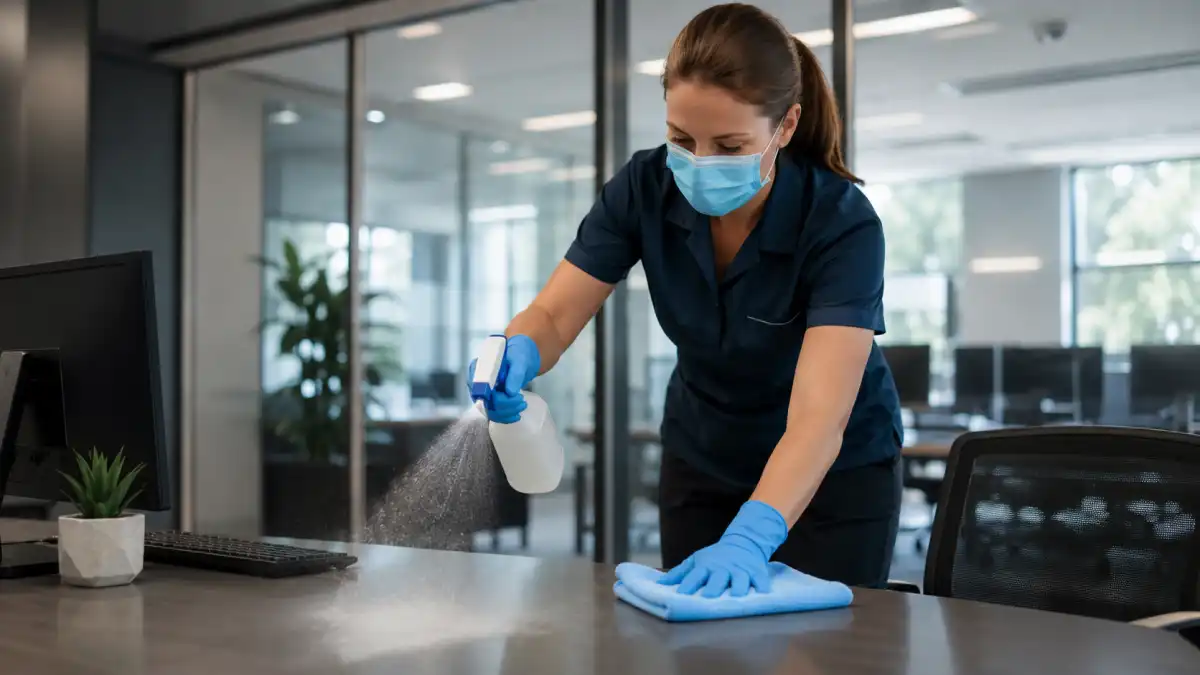
Most businesses in Victoria schedule regular cleaning and assume they’re covered. The floors get mopped, the surfaces get wiped, the bathrooms get scrubbed. That’s cleaning. It is not the same thing as sanitization, and mixing them up can leave your space looking clean while still harboring bacteria and pathogens on the surfaces your employees and customers touch every day.
Here’s the actual difference between standard cleaning and professional sanitization services, where it matters most, and how to know when your space needs more than a standard clean.
Cleaning Removes Dirt. Sanitization Reduces Pathogens.
Cleaning is a physical process. You remove visible dirt, dust, grease, and debris from surfaces. A clean surface looks and smells clean.
Sanitization is a chemical process. It uses EPA-registered disinfectants to reduce the number of bacteria and viruses on a surface to levels considered safe by public health standards. A sanitized surface may or may not look different from an uncleaned one. The point isn’t appearance. It’s microbial load.
The two processes are different enough that they often require separate products and different application methods. Most standard cleaning solutions are not classified as sanitizers or disinfectants. Wiping a surface with a general-purpose cleaner removes grime but does not kill bacteria or inactivate viruses.
Where the Difference Actually Matters in Victoria, TX Businesses
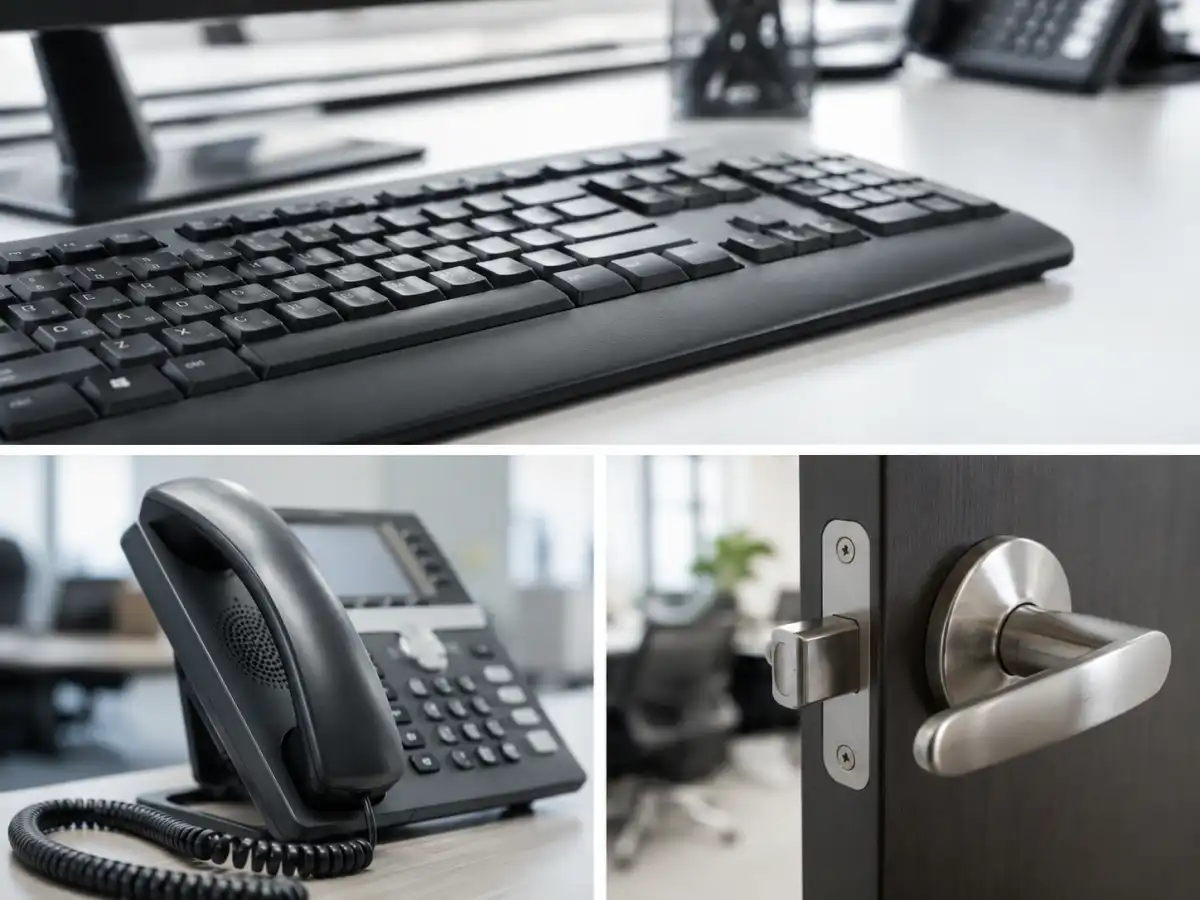
For most commercial spaces, the surfaces that carry the highest pathogen risk are not the ones that look the dirtiest. They’re the ones that get touched repeatedly throughout the day.
Door handles and push plates: Every person entering or leaving the building touches these. They rarely get cleaned during routine visits and almost never get disinfected unless someone specifically plans for it.
Keyboards, mice, and shared equipment: Shared office equipment is one of the most consistently high-risk surfaces in any workplace. A standard cleaning crew wipes monitors and desks but usually doesn’t handle equipment unless directed.
Restroom surfaces beyond the obvious: Faucet handles, door locks, paper towel dispenser levers, and flush handles are touched after hand contact with contaminated surfaces. These need disinfectant-grade products, not general-purpose spray.
Break room and kitchen areas: Refrigerator handles, microwave buttons, coffee machine components, and countertops that contact food prep all need sanitization on a regular schedule, especially during cold and flu season or after any illness circulates through an office.
Gym and fitness equipment: Gym equipment surfaces, including handles, seats, adjustment pins, and weight plates, carry sweat and skin contact from multiple users throughout the day. You can read more about how this applies specifically to gymnasium cleaning services for athletic facilities in South Texas.
When Your Business in Victoria Needs Sanitization, Not Just Cleaning
Regular cleaning on a standard schedule is appropriate for most commercial spaces most of the time. There are specific situations where sanitization should be added or prioritized.
After a confirmed illness in the workplace. When an employee or customer reports a confirmed contagious illness, a sanitization of all high-touch surfaces in the affected area is appropriate within 24 hours.
Seasonal scheduling. Most businesses in South Texas benefit from a scheduled sanitization at the start of flu season (October/November) and again after winter, when cold viruses and respiratory illnesses peak.
Before reopening after a closure. Whether it’s a renovation, holiday shutdown, or extended closure, sanitizing before occupancy removes anything that settled during the downtime.
Healthcare-adjacent spaces. Any business where clients or employees may be immunocompromised, elderly, or in regular contact with vulnerable populations should treat sanitization as a standard part of their cleaning program rather than an add-on.
What a Professional Sanitization Service Covers
For businesses that want sanitization built into their regular routine, pairing it with a scheduled cleaning program is the most practical approach. Calvo’s Janitorial maps out high-touch zones in your specific space, applies EPA-registered disinfectants with the appropriate contact time for each surface type, and works systematically through the building.
Contact time matters. A disinfectant that gets wiped off immediately doesn’t work. The product has to stay wet on the surface for the dwell time specified on the label, usually between 30 seconds and 10 minutes depending on the product and the target pathogen. Professional crews know this. Rushing through a sanitization negates much of the benefit.
For businesses in Victoria, Cuero, Beeville, Goliad, and the surrounding South Texas area, we can build sanitization into your regular cleaning schedule or provide it as a standalone service when the situation calls for it.
Contact Calvo’s Janitorial to discuss adding professional sanitization services to your cleaning schedule in Victoria, TX. We serve businesses across South Texas including Beeville, Cuero, Goliad, Edna, Gonzales, Hallettsville, Karnes City, and Corpus Christi.