
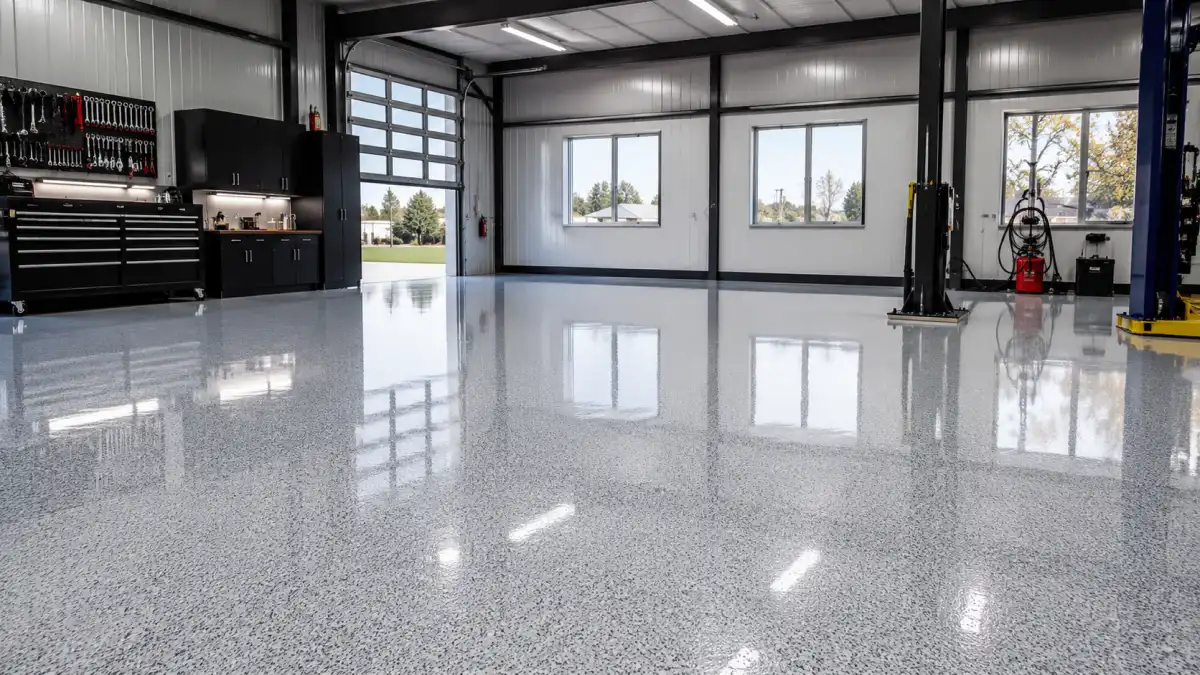
Epoxy flooring has become one of the more popular upgrades for commercial spaces, garages, warehouses, and industrial facilities in South Texas. The finish looks sharp, it’s easier to clean than bare concrete, and it holds up well under heavy use. You can see examples of completed projects in our project gallery.
But there’s a gap between the before-and-after photos and what actually goes into a proper installation, and not every floor is a good candidate to start with. Here’s what the process involves, what it costs in the Victoria area, and what affects how long epoxy flooring actually lasts in South Texas conditions.
What Epoxy Flooring Actually Is
Epoxy is a resin system that chemically bonds to concrete when applied correctly. It’s not paint. It’s a two-part coating made of resin and hardener that cures into a hard, durable surface. A quality epoxy flooring installation is typically 2 to 3 millimeters thick and significantly harder than the concrete underneath it.
There are several types used for different applications. Solid epoxy coatings are the standard for garages, warehouses, and commercial floors. Water-based epoxy is thinner and less durable but easier to apply as a DIY project. Epoxy terrazzo and metallic epoxy finishes are decorative systems used in retail, hospitality, and high-visibility spaces. The type of system matters for both aesthetics and performance.
What the Installation Process Looks Like
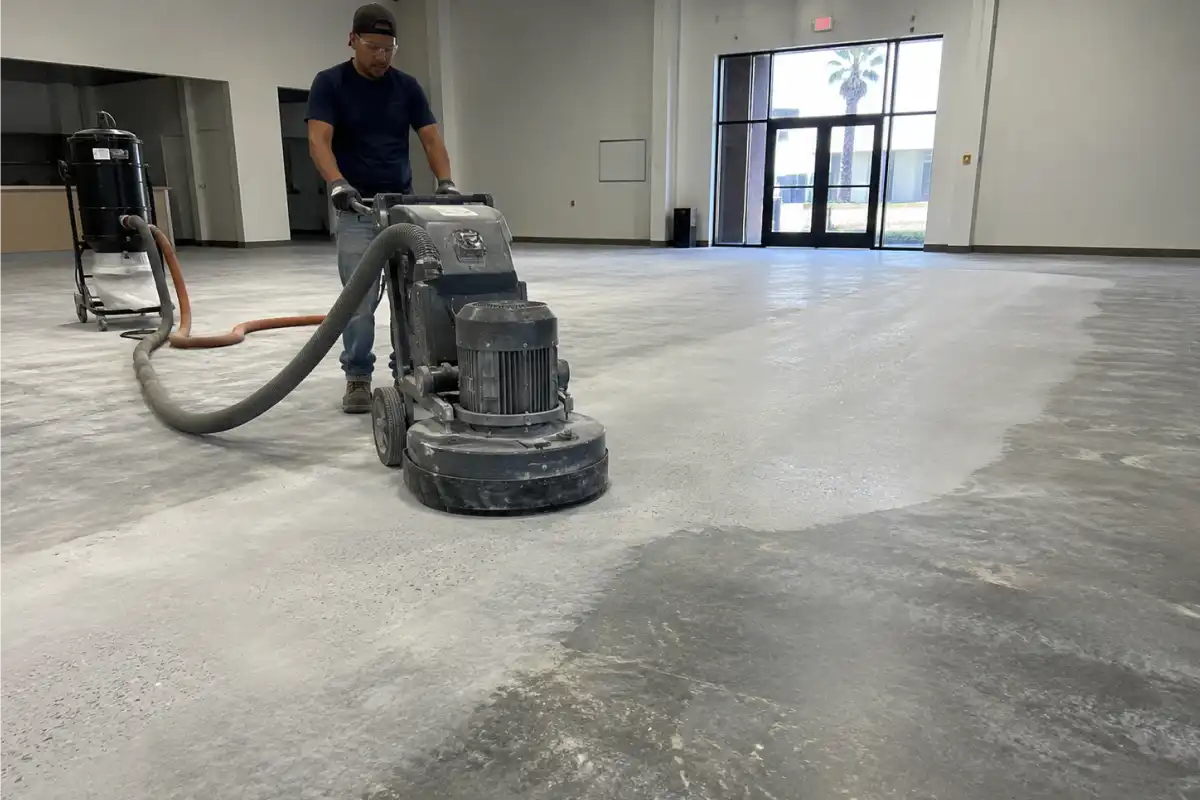
Proper epoxy installation is mostly surface preparation. The coating is only as good as the concrete it bonds to, and concrete that hasn’t been properly prepared will cause delamination, bubbling, or peeling within a year.
Surface prep: The concrete gets mechanically abraded, usually by diamond grinding or shot blasting, to open the pores and give the epoxy something to grip. Cracks and spalls are filled. Oil stains on garage or warehouse floors require treatment to prevent adhesion failure. This step takes longer than the coating itself.
Moisture testing: Concrete that holds moisture will cause adhesion problems. A reputable installer tests moisture vapor emission before applying any coating. In South Texas, where ground moisture and humidity levels are higher than average, this step is critical and sometimes gets skipped by less experienced applicators.
Primer coat: A penetrating primer seals the concrete and improves adhesion for the top coat. On porous or previously coated floors, this is not optional.
Base coat and broadcast: The main epoxy coat goes down. Decorative flake or quartz aggregate is broadcast into the wet epoxy if the design calls for it. This layer cures before the next step.
Top coat: A clear urethane or polyaspartic top coat seals the surface, adds UV stability, and determines the sheen level. The top coat is what protects the color and finish from abrasion and chemical exposure.
Total installation time for a standard garage or commercial floor is typically one to three days, including cure time between coats. The floor needs to cure fully before vehicle or heavy equipment traffic, usually 24 to 72 hours for light foot traffic and 5 to 7 days for full load.
Epoxy Flooring Cost in Victoria, TX
For a professionally installed epoxy floor system in the Victoria area, expect to pay $3 to $7 per square foot for a standard solid color or flake system. Metallic and decorative systems run $8 to $12 or more per square foot depending on the design complexity.
Those numbers assume a floor in reasonable condition. Heavy cracking, previous failed coatings that need removal, or severe contamination can add $1 to $3 per square foot to the prep work. Getting an accurate quote requires an in-person assessment of the actual floor.
DIY epoxy kits from big box stores run $100 to $300 for a standard two-car garage. They’re water-based, thin, and typically start peeling within a year or two under vehicle traffic. The economics of a professionally installed system make more sense over a 5 to 10 year timeline.
How Epoxy Holds Up in South Texas Conditions
South Texas presents two specific challenges for epoxy flooring: UV exposure and thermal cycling.
UV exposure from direct sunlight causes standard epoxy to yellow and chalk over time. Exterior or sun-exposed garage floors need a polyaspartic or aliphatic urethane top coat rather than a standard epoxy top coat. The distinction matters. Ask specifically about UV stability when getting quotes for any floor that sees sunlight.
Thermal cycling refers to the expansion and contraction of the concrete substrate as South Texas temperatures swing from the 30s in winter to 100 degrees or more in summer. This puts stress on the bond line between the epoxy and the concrete. A properly prepped floor with the right primer handles this. Floors that weren’t moisture-tested or didn’t get proper mechanical prep show delamination at control joints and edges first.
Once your epoxy floor is installed, keeping it in good shape long-term comes down to regular maintenance. Our general cleaning services include epoxy floor care as part of commercial cleaning programs for facilities across Victoria and South Texas.
Interested in epoxy flooring for your Victoria, TX garage, warehouse, or commercial space? Contact Calvo’s Janitorial for an assessment and quote. We serve clients in Victoria, Beeville, Cuero, Goliad, Gonzales, Edna, Hallettsville, Karnes City, and Corpus Christi.